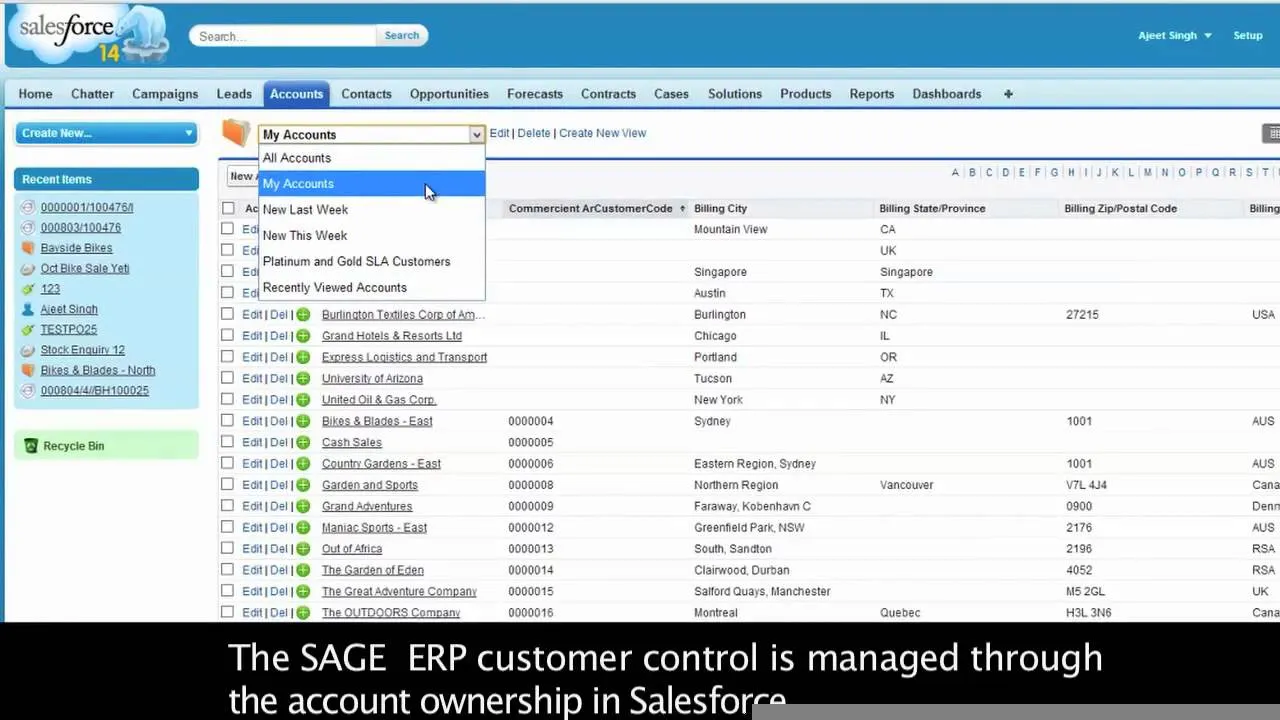
Welcome, curious reader! Have you ever wondered if Salesforce, the popular customer relationship management (CRM) platform, offers an enterprise resource planning (ERP) solution as well? The answer is not as straightforward as you might think. In this article, we will explore whether Salesforce provides an ERP solution that can streamline your business operations and optimize your resources. So, grab a cup of coffee and let’s dive into the world of Salesforce’s ERP offerings.
Introduction to Salesforce
Salesforce is a cloud-based customer relationship management (CRM) software that is known for its robust features and flexibility. What many people don’t realize is that Salesforce also offers powerful ERP (Enterprise Resource Planning) capabilities through its Salesforce ERP Cloud. This solution integrates seamlessly with the CRM platform, allowing businesses to manage all aspects of their operations in one centralized system.
With Salesforce ERP, companies can streamline processes such as accounting, inventory management, human resources, and more. This not only saves time and resources, but it also helps organizations make data-driven decisions based on real-time information. The ERP Cloud is fully customizable, allowing businesses to tailor the system to meet their specific needs and scale as their business grows.
One of the key benefits of using Salesforce ERP is the integration with other Salesforce products, such as Sales Cloud and Service Cloud. This allows businesses to have a complete view of their customers and operations, leading to better collaboration and improved customer experiences. Additionally, Salesforce ERP is built on a secure and reliable platform, ensuring that sensitive data is protected at all times.
Businesses of all sizes can benefit from using Salesforce ERP, whether they are looking to streamline operations, improve efficiency, or gain a competitive edge in their industry. The cloud-based nature of the software means that updates and new features are automatically provided, keeping businesses up-to-date with the latest technologies and tools.
In conclusion, Salesforce not only offers a world-class CRM solution, but also a powerful ERP system that can help businesses drive growth and success. By leveraging the Salesforce ERP Cloud, companies can gain a competitive advantage, improve collaboration, and make data-driven decisions that drive results.
Understanding ERP systems
Enterprise Resource Planning (ERP) systems are software applications that enable businesses to manage and integrate various aspects of their operations. These systems typically include modules for functions such as accounting, human resources, inventory management, customer relationship management, and more. ERP systems provide a centralized platform for organizations to streamline processes, improve efficiency, and make informed decisions based on data.
One of the key features of ERP systems is the ability to automate and standardize processes across different departments within an organization. This means that data inputted into the system is consistent and can be easily accessed by authorized users. For example, a sales team can input customer data into the CRM module, which can then be used by the marketing team to create targeted campaigns, and by the finance team to generate invoices.
ERP systems also provide real-time visibility into various aspects of the business, allowing managers to track performance metrics, monitor inventory levels, and analyze sales trends. This visibility enables organizations to make data-driven decisions and respond quickly to changes in the market.
Integration is another key aspect of ERP systems, as they are designed to connect with other business applications such as e-commerce platforms, supply chain management systems, and business intelligence tools. This interoperability ensures that data flows seamlessly between different systems, eliminating the need for manual data entry and reducing the risk of errors.
Furthermore, ERP systems often include features for compliance and risk management, such as audit trails, security protocols, and automated reporting. This helps organizations ensure regulatory compliance, maintain data security, and mitigate potential risks.
In conclusion, ERP systems are powerful tools that help businesses streamline their operations, improve efficiency, and make informed decisions. By integrating various functions into a single platform, ERP systems provide a comprehensive view of the organization and enable managers to optimize processes and drive growth.
Salesforce CRM vs ERP
Salesforce is a well-known customer relationship management (CRM) software that helps businesses manage their relationships and interactions with customers and potential customers. On the other hand, Enterprise Resource Planning (ERP) software is designed to help businesses manage all aspects of their operations, including finance, HR, supply chain, and more. While Salesforce is primarily focused on sales, marketing, and customer service, it does have some ERP features that can help businesses streamline their operations.
When comparing Salesforce CRM and ERP, it’s important to understand the differences between the two types of software. CRM software is designed to help businesses manage their customer relationships, track sales activities, and improve customer service. It is typically used by sales, marketing, and customer service teams to keep track of customer interactions and provide better service. ERP software, on the other hand, is designed to help businesses manage their operations and streamline processes across departments. ERP software integrates various functions like finance, HR, and supply chain management to provide a comprehensive solution for businesses.
While Salesforce is primarily known for its CRM features, it does offer some ERP functionality through its Salesforce Platform. The Salesforce Platform allows businesses to build custom applications and integrations that can help streamline their operations and improve efficiency. Businesses can use the Salesforce Platform to create custom apps for managing finance, HR, supply chain, and other aspects of their operations. This can help businesses to consolidate their software systems and have a unified platform for managing all aspects of their business.
One of the key advantages of using Salesforce for CRM and ERP is the integration between the two systems. Since Salesforce is a cloud-based platform, businesses can easily integrate their CRM and ERP data to get a comprehensive view of their operations. This integration can help businesses make better decisions, improve collaboration between departments, and provide a better experience for customers.
In conclusion, while Salesforce is primarily known for its CRM features, it does offer some ERP functionality through its Salesforce Platform. Businesses can use the Salesforce Platform to build custom applications and integrations that can help streamline their operations and improve efficiency. By integrating CRM and ERP data, businesses can get a comprehensive view of their operations and make better decisions. Overall, Salesforce can be a valuable tool for businesses looking to streamline their operations and improve their customer relationships.
Does Salesforce offer ERP functionalities?
Salesforce is primarily known for its customer relationship management (CRM) software, but it also offers a wide range of enterprise resource planning (ERP) functionalities through its Salesforce platform. While Salesforce does not offer a traditional ERP system like SAP or Oracle, it does provide tools and features that can help businesses streamline their operations, manage their finances, and improve their overall efficiency.
One of the key ERP functionalities that Salesforce offers is financial management. The platform includes modules for accounting, invoicing, and financial reporting, allowing businesses to track their expenses, revenues, and cash flow in real-time. This can help companies make more informed financial decisions and ensure that they are operating within budget.
In addition to financial management, Salesforce also offers inventory management capabilities. Businesses can use the platform to track their inventory levels, monitor stock movements, and optimize their supply chain processes. This can help companies reduce excess inventory, minimize stockouts, and improve their overall inventory turnover rate.
Another essential ERP functionality that Salesforce provides is human resources management. The platform includes modules for recruiting, onboarding, performance management, and employee engagement, allowing businesses to streamline their HR processes and improve employee productivity. This can help companies attract top talent, retain their best employees, and create a positive work culture.
Furthermore, Salesforce offers project management functionalities that can help businesses plan, execute, and monitor their projects more effectively. The platform includes tools for project planning, task assignment, time tracking, and progress reporting, enabling teams to collaborate on projects, meet deadlines, and deliver high-quality results. This can help companies increase their project success rate and improve their overall project management capabilities.
Overall, while Salesforce may not offer a traditional ERP system, it does provide a wide range of ERP functionalities that can help businesses streamline their operations, manage their finances, and improve their overall efficiency. By leveraging the tools and features available on the Salesforce platform, companies can enhance their financial management, inventory management, human resources management, and project management capabilities, leading to increased productivity, profitability, and success.
Integrating Salesforce with ERP systems
When it comes to integrating Salesforce with ERP systems, there are several ways to do so in order to streamline operations and improve efficiency. One of the most common methods is through the use of connectors, which are tools that help facilitate data sharing between the two platforms. These connectors can be either pre-built or custom-made, depending on the specific needs of the organization. By using connectors, businesses can ensure that data is synced in real-time between Salesforce and their ERP system, reducing the risk of errors and ensuring that all departments have access to up-to-date information.
Another way to integrate Salesforce with ERP systems is through the use of APIs (Application Programming Interfaces). APIs allow different software systems to communicate with each other, enabling seamless data transfer and automation of processes. By leveraging APIs, businesses can create a more cohesive and interconnected ecosystem that allows for better collaboration between sales, marketing, finance, and other departments.
Additionally, some ERP systems offer built-in integrations with Salesforce, making it easier for businesses to connect the two platforms without the need for additional customization or development work. These pre-built integrations often come with out-of-the-box functionality that allows for easy synchronization of data, such as customer information, sales orders, and inventory levels. By taking advantage of these pre-built integrations, businesses can save time and resources while still benefiting from a connected and streamlined system.
Furthermore, some businesses choose to implement middleware tools to help facilitate the integration process between Salesforce and their ERP system. Middleware acts as a bridge between different software applications, allowing for seamless communication and data exchange. By using middleware, businesses can ensure that data is accurately transferred between Salesforce and their ERP system, regardless of any differences in data formats or structures.
Finally, it’s important for businesses to consider the potential challenges and limitations of integrating Salesforce with ERP systems. These challenges can include data mapping issues, security concerns, and compatibility issues between the two platforms. By thoroughly researching and planning the integration process, businesses can address these challenges proactively and ensure a smooth and successful integration.
Originally posted 2025-09-05 19:48:41.